


ancestors
blood leaf
blood leaf
cycle drops


A dark botanical ceremony for PMS, monthly discomfort and the shifting rhythm of the cycle.
Redirect the flow and move like the women before you.
Couldn't load pickup availability



✺
blood leaf combines old plants and modern ingredients.
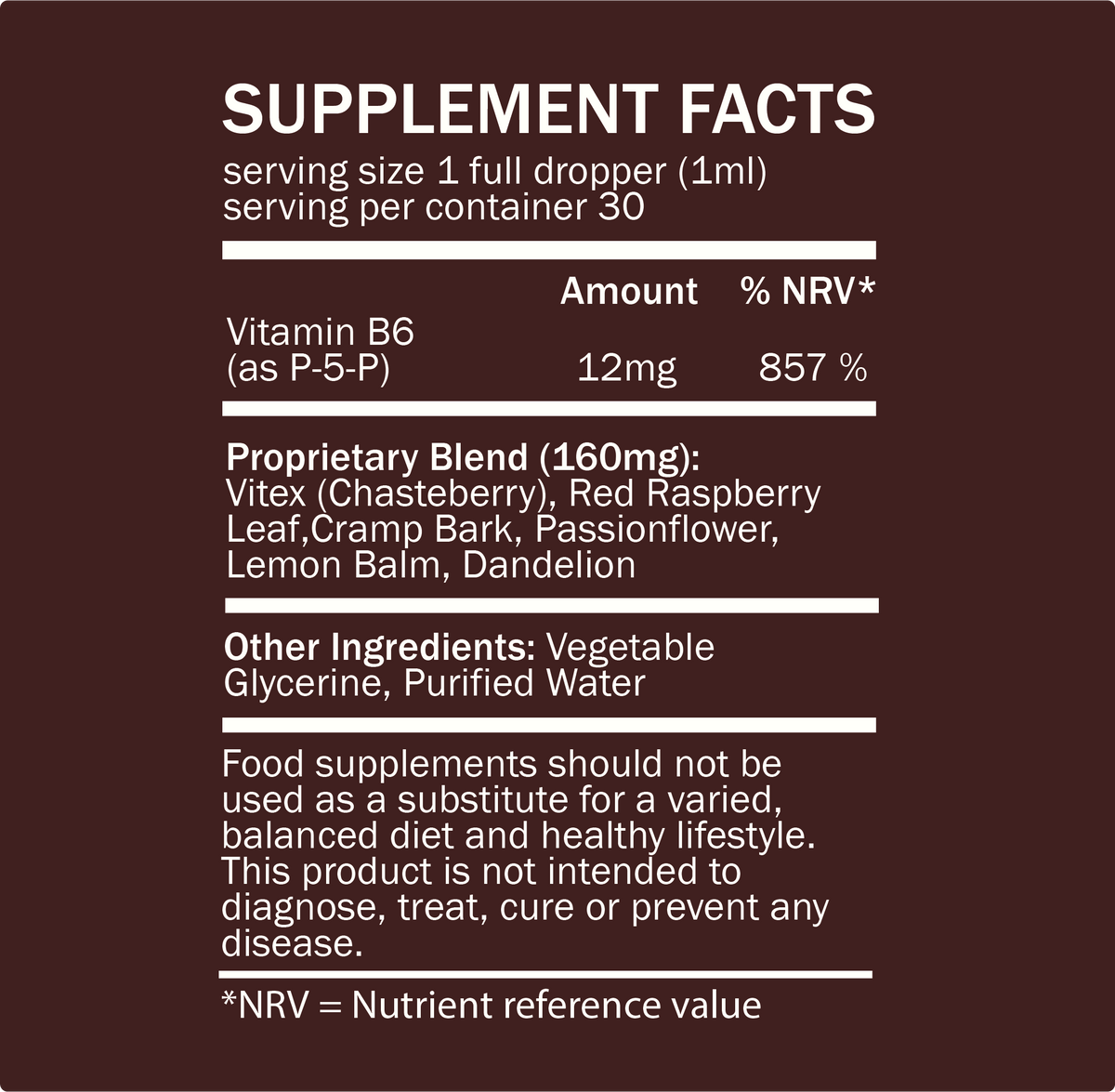
Chasteberry (vitex) studies demonstrate direct action on the dopamine and prolactin pathways linked to premenstrual symptoms, while vitamin B6 helps make neurotransmitters including GABA, serotonin and dopamine, supporting hormonal activity. Passionflower works through GABA-related calming pathways, while compounds in lemon balm has been shown to slow GABA breakdown.
Cramp bark and red raspberry leaf have long been used around uterine and smooth-muscle tension, while dandelion has been studied to calm mild digestion symptoms.
These actions overlap across mood, tension and physical sensitivity, helping the days before your period feel steadier and easier to move through.
✺
plant entourage effect

chasteberry
Chasteberry has traditionally been used when cycles felt irregular or emotionally turbulent. Traditional European herbalists valued it for rhythm - not pain relief, but for supporting hormonal s... read more
Chasteberry has traditionally been used when cycles felt irregular or emotionally turbulent. Traditional European herbalists valued it for rhythm - not pain relief, but for supporting hormonal steadiness when patterns felt unsettled.
Modern research explains its role. Chasteberry acts on the hypothalamic–pituitary axis, influencing dopamine and helping regulate prolactin levels. By supporting progesterone balance in the luteal phase, it eases common PMS symptoms and encourage more predictable cycles.
Active Compounds
Iridoid glycosides (agnuside, aucubin) – support dopaminergic activity and prolactin regulation
Flavonoids - antioxidant and endocrine-supportive actions
Diterpenes - contribute to pituitary-modulating effects
Essential oils (trace) - minor supportive role
read lesshormone balance
PMS relief

cramp bark
cramp bark was the herb women reached for when period pain “gripped” the body. Native healers used it for uterine colic - a smooth-muscle relaxer that softened sharp, dragging ... read more
cramp bark was the herb women reached for when period pain “gripped” the body. Native healers used it for uterine colic - a smooth-muscle relaxer that softened sharp, dragging cramps. Not a sedative, just an herb that helped the body unclench.
Modern science explains why. Cramp bark’s viburnine-type compounds directly relax uterine and pelvic smooth muscle, reducing spasm intensity. It makes cramps feel less sharp, less sudden, and more manageable. Notes from traditional medicine - easing lower-back pain and pelvic tightness - line up with its antispasmodic profile. Simple, direct, effective.
Active Compounds
Viburnine & viopudial - potent antispasmodics; relax uterine smooth muscle and reduce contraction intensity.
Valerenic-acid–like constituents - calm neural excitability and soften tension patterns.
Coumarins & tannins - mild anti-inflammatory, astringent actions that support pelvic comfort.
Salicosides (trace) - gentle analgesic-type compounds adding to overall relief.
cramp relief
antispasmodic
pms support

red raspberry leaf
For centuries, red raspberry leaf was taken to strengthen and steady the womb. Traditional herbalists used it when cycles felt heavy, dragging, or physically draining - a tonic to build resilien... read more
For centuries, red raspberry leaf was taken to strengthen and steady the womb. Traditional herbalists used it when cycles felt heavy, dragging, or physically draining - a tonic to build resilience rather than simply mask discomfort.
Modern understanding supports its role. Fragarine-type compounds help normalise uterine muscle tone, encouraging coordinated contractions instead of erratic tension. Its tannins offer mild astringent support, traditionally linked with steadier flow, while its mineral content nourishes tissues under cyclical stress. Structural support. Greater stability. A stronger foundation each month.
Active Compounds
Fragarine - supports healthy uterine muscle tone and contraction coordination.
Tannins - mild astringent action; traditionally linked with supporting heavier flow.
Flavonoids - antioxidant compounds that support tissue resilience.
Minerals (trace iron, magnesium, calcium) - nutritive support for reproductive tissues.
cycle comfort
uterine tonic
pelvic heaviness

lemon balm
For centuries, lemon balm was taken to “lift the heaviness of the heart.” Medieval physicians used it for melancholy, nerves, and menstrual irritability- a herb to soften mood swings an... read more
For centuries, lemon balm was taken to “lift the heaviness of the heart.” Medieval physicians used it for melancholy, nerves, and menstrual irritability- a herb to soften mood swings and steady the body when emotions surged before bleeding.
Modern research backs its calm. Lemon balm’s compounds raise GABA levels, easing tension, irritability, PMS-related anxiety, digestive cramps, and that restless, wired feeling. It smooths emotional edges and settles the gut–mind connection, making the cycle feel lighter and more manageable.
Active Compounds
Rosmarinic acid – boosts GABA; reduces anxiety and emotional volatility.
Geraniol & citral – calm the nervous system; reduce irritability and restlessness.
Flavonoids (luteolin, apigenin) – anti-inflammatory, ease pelvic and digestive tension.
Triterpenes – support mood stability.
mood support
calming
pms support

dandelion
In European folk medicine, dandelion was the herb for “stuck” cycles - bloating, puffiness, water retention, and hormonal sluggishness. Women used it to feel lighter before and during t... read more
In European folk medicine, dandelion was the herb for “stuck” cycles - bloating, puffiness, water retention, and hormonal sluggishness. Women used it to feel lighter before and during their period.
Science explains its role. Dandelion supports liver detoxification, which helps clear excess estrogen – often the culprit behind PMS swelling, mood dips, and breast tenderness. Its natural diuretic action gently reduces water retention without stripping electrolytes.
Taraxasterol & taraxerol - support liver hormone metabolism.
Potassium-rich diuretics - reduce bloating safely.
Inulin - aids digestion; calms PMS-related gut discomfort.
Chlorogenic acids - anti-inflammatory; support metabolic balance.
read lessbloating relief
liver support
calming

passionflower
Historically, passionflower was used for “overwhelm of the spirit.” Herbalists gave it to calm emotional flare-ups, irritability, and restless sleep around the menstrual cycle.
Mo... read more
Historically, passionflower was used for “overwhelm of the spirit.” Herbalists gave it to calm emotional flare-ups, irritability, and restless sleep around the menstrual cycle.
Modern studies show passionflower boosts GABA and reduces anxiety with efficacy comparable to mild anti-anxiety medication - without sedation. It smooths PMS irritability, emotional spikes, tension headaches, and pre-period insomnia.
Harmala alkaloids - increase GABA; reduce anxiety and agitation.
Flavonoids (chrysin, vitexin) - anxiolytic; ease nervous tension.
GABA-modulating compounds - support relaxation and sleep stability.
Aromatics - soothe overstimulated nerves.
calming
anxiety relief
pms support

B6 (methylcobalamin)
Long used in clinical nutrition for PMS, B6 supports mood, hormone balance, and neurotransmitter production. Women with PMS often respond quickly to B6 because it replenishes what fluct... read more
Long used in clinical nutrition for PMS, B6 supports mood, hormone balance, and neurotransmitter production. Women with PMS often respond quickly to B6 because it replenishes what fluctuating hormones deplete.
Scientifically, B6 supports the synthesis of serotonin, dopamine, and GABA, helping reduce PMS mood swings, irritability, cravings, and low energy. It also helps regulate estrogen metabolism.
Active Mechanisms
Pyridoxal-5-phosphate (P-5-P) - active form used directly by the brain.
Serotonin synthesis - improves low mood and emotional stability.
GABA support - reduces tension and anxiety.
Hormone cofactor - assists in healthy estrogen–progesterone balance.
fatigue reduction
neuro support
chasteberry
Chasteberry has traditionally been used when cycles felt irregular or emotionally turbulent. Traditional European herbalists valued it for rhythm - not pain relief, but for supporting hormonal s... read more
Chasteberry has traditionally been used when cycles felt irregular or emotionally turbulent. Traditional European herbalists valued it for rhythm - not pain relief, but for supporting hormonal steadiness when patterns felt unsettled.
Modern research explains its role. Chasteberry acts on the hypothalamic–pituitary axis, influencing dopamine and helping regulate prolactin levels. By supporting progesterone balance in the luteal phase, it eases common PMS symptoms and encourage more predictable cycles.
Active Compounds
Iridoid glycosides (agnuside, aucubin) – support dopaminergic activity and prolactin regulation
Flavonoids - antioxidant and endocrine-supportive actions
Diterpenes - contribute to pituitary-modulating effects
Essential oils (trace) - minor supportive role
read lesshormone balance
PMS relief
cramp bark
cramp bark was the herb women reached for when period pain “gripped” the body. Native healers used it for uterine colic - a smooth-muscle relaxer that softened sharp, dragging ... read more
cramp bark was the herb women reached for when period pain “gripped” the body. Native healers used it for uterine colic - a smooth-muscle relaxer that softened sharp, dragging cramps. Not a sedative, just an herb that helped the body unclench.
Modern science explains why. Cramp bark’s viburnine-type compounds directly relax uterine and pelvic smooth muscle, reducing spasm intensity. It makes cramps feel less sharp, less sudden, and more manageable. Notes from traditional medicine - easing lower-back pain and pelvic tightness - line up with its antispasmodic profile. Simple, direct, effective.
Active Compounds
Viburnine & viopudial - potent antispasmodics; relax uterine smooth muscle and reduce contraction intensity.
Valerenic-acid–like constituents - calm neural excitability and soften tension patterns.
Coumarins & tannins - mild anti-inflammatory, astringent actions that support pelvic comfort.
Salicosides (trace) - gentle analgesic-type compounds adding to overall relief.
cramp relief
antispasmodic
pms support
red raspberry leaf
For centuries, red raspberry leaf was taken to strengthen and steady the womb. Traditional herbalists used it when cycles felt heavy, dragging, or physically draining - a tonic to build resilien... read more
For centuries, red raspberry leaf was taken to strengthen and steady the womb. Traditional herbalists used it when cycles felt heavy, dragging, or physically draining - a tonic to build resilience rather than simply mask discomfort.
Modern understanding supports its role. Fragarine-type compounds help normalise uterine muscle tone, encouraging coordinated contractions instead of erratic tension. Its tannins offer mild astringent support, traditionally linked with steadier flow, while its mineral content nourishes tissues under cyclical stress. Structural support. Greater stability. A stronger foundation each month.
Active Compounds
Fragarine - supports healthy uterine muscle tone and contraction coordination.
Tannins - mild astringent action; traditionally linked with supporting heavier flow.
Flavonoids - antioxidant compounds that support tissue resilience.
Minerals (trace iron, magnesium, calcium) - nutritive support for reproductive tissues.
cycle comfort
uterine tonic
pelvic heaviness
lemon balm
For centuries, lemon balm was taken to “lift the heaviness of the heart.” Medieval physicians used it for melancholy, nerves, and menstrual irritability- a herb to soften mood swings an... read more
For centuries, lemon balm was taken to “lift the heaviness of the heart.” Medieval physicians used it for melancholy, nerves, and menstrual irritability- a herb to soften mood swings and steady the body when emotions surged before bleeding.
Modern research backs its calm. Lemon balm’s compounds raise GABA levels, easing tension, irritability, PMS-related anxiety, digestive cramps, and that restless, wired feeling. It smooths emotional edges and settles the gut–mind connection, making the cycle feel lighter and more manageable.
Active Compounds
Rosmarinic acid – boosts GABA; reduces anxiety and emotional volatility.
Geraniol & citral – calm the nervous system; reduce irritability and restlessness.
Flavonoids (luteolin, apigenin) – anti-inflammatory, ease pelvic and digestive tension.
Triterpenes – support mood stability.
mood support
calming
pms support
dandelion
In European folk medicine, dandelion was the herb for “stuck” cycles - bloating, puffiness, water retention, and hormonal sluggishness. Women used it to feel lighter before and during t... read more
In European folk medicine, dandelion was the herb for “stuck” cycles - bloating, puffiness, water retention, and hormonal sluggishness. Women used it to feel lighter before and during their period.
Science explains its role. Dandelion supports liver detoxification, which helps clear excess estrogen – often the culprit behind PMS swelling, mood dips, and breast tenderness. Its natural diuretic action gently reduces water retention without stripping electrolytes.
Taraxasterol & taraxerol - support liver hormone metabolism.
Potassium-rich diuretics - reduce bloating safely.
Inulin - aids digestion; calms PMS-related gut discomfort.
Chlorogenic acids - anti-inflammatory; support metabolic balance.
read lessbloating relief
liver support
calming
passionflower
Historically, passionflower was used for “overwhelm of the spirit.” Herbalists gave it to calm emotional flare-ups, irritability, and restless sleep around the menstrual cycle.
Mo... read more
Historically, passionflower was used for “overwhelm of the spirit.” Herbalists gave it to calm emotional flare-ups, irritability, and restless sleep around the menstrual cycle.
Modern studies show passionflower boosts GABA and reduces anxiety with efficacy comparable to mild anti-anxiety medication - without sedation. It smooths PMS irritability, emotional spikes, tension headaches, and pre-period insomnia.
Harmala alkaloids - increase GABA; reduce anxiety and agitation.
Flavonoids (chrysin, vitexin) - anxiolytic; ease nervous tension.
GABA-modulating compounds - support relaxation and sleep stability.
Aromatics - soothe overstimulated nerves.
calming
anxiety relief
pms support
B6 (methylcobalamin)
Long used in clinical nutrition for PMS, B6 supports mood, hormone balance, and neurotransmitter production. Women with PMS often respond quickly to B6 because it replenishes what fluct... read more
Long used in clinical nutrition for PMS, B6 supports mood, hormone balance, and neurotransmitter production. Women with PMS often respond quickly to B6 because it replenishes what fluctuating hormones deplete.
Scientifically, B6 supports the synthesis of serotonin, dopamine, and GABA, helping reduce PMS mood swings, irritability, cravings, and low energy. It also helps regulate estrogen metabolism.
Active Mechanisms
Pyridoxal-5-phosphate (P-5-P) - active form used directly by the brain.
Serotonin synthesis - improves low mood and emotional stability.
GABA support - reduces tension and anxiety.
Hormone cofactor - assists in healthy estrogen–progesterone balance.
fatigue reduction
neuro support
flow reflections:
felt a smoother emotional baseline
reported less cramping and greater physical ease
were less stressed before the flow period
*Based on a 4 week consumer trial of 20 female participants.
did you ask something?
When will I feel it?
Generally, 1-2 weeks.
Individual responses vary. Take it as directed and assess whether it suits you across two to three menstrual cycles rather than judging it from a single dose.
should I take it every day or only before my period?
Take Blood Leaf consistently every day throughout your cycle, including during your period, following the directions on the bottle. Do not increase the serving during the days before your period.
what age is blood leaf for?
blood leaf is intended for adults aged 18 and over. It is not recommended for children or teenagers.
Can I take blood leaf with other medication?
Check with a doctor or pharmacist before use if you take prescription medication, particularly hormonal or dopamine-related medicines. Bring the complete ingredient list with you so they can assess it properly.
Can I take it while pregnant or breastfeeding?
No - do not use blood leaf during pregnancy or while breastfeeding.

